|


 |
|
|

|

|
|
|
|
|
United States – May 27, 2025 – Phil Robertson, the beloved patriarch of the "Duck Dynasty" family, founder of Duck Commander, and an outspoken voice for faith and family, passed away peacefully at the age of 79. The news of his passing was announced by his family, marking the end of a remarkable life that transformed a humble duck call business into a global phenomenon and etched his unique persona into the fabric of American culture.
Robertson had been battling Alzheimer's disease, a condition his son, Jase Robertson, publicly discussed in December 2024, noting his father's struggles. The family shared a statement on social media, including Korie Robertson, wife of Willie Robertson, expressing their profound love and gratitude for his life. "We celebrate today that our father, husband, and grandfather, Phil Robertson, is now with the Lord," the statement read, emphasizing his bold faith and desire to share the Gospel. While a private service for the immediate family will be held, plans for a public celebration of his life will be shared in due course, allowing the many admirers he impacted to pay their respects.
Born on April 24, 1946, in Vivian, Louisiana, Phil Robertson's early life was defined by the rugged beauty of the Sportsman's Paradise. He grew up hunting and fishing, a passion that would later shape his destiny. A talented athlete, Robertson earned a football scholarship to Louisiana Tech University, where he played quarterback. However, his true calling lay in the wilderness and the ingenious craft of creating duck calls. Disenchanted with the quality of existing calls, he meticulously designed and patented his own in 1972, meticulously replicating the precise sounds of a duck. This innovation marked the genesis of Duck Commander, a company he officially incorporated in 1973. From his modest home in West Monroe, Louisiana, which served as the initial factory, Phil and his wife, Kay Robertson, along with their children, began building what would become a multi-million-dollar enterprise.
The world was introduced to Phil Robertson and his distinctive family through the A&E reality television series Duck Dynasty, which premiered in 2012. The show followed the exploits of the close-knit Robertson clan, with Phil at its helm, showcasing their daily lives, their thriving business, and their unwavering adherence to traditional values and Christian faith. The series resonated with millions, achieving unprecedented viewership for a non-fiction cable program, and catapulting Phil and his family into national stardom. His signature long beard, deep voice, and often unconventional wisdom became instantly recognizable, turning him into an accidental icon.
Phil Robertson was as well-known for his deeply held conservative and Christian beliefs as he was for his duck calls. He consistently used his platform to share his faith and express his views on social issues, a stance that occasionally generated significant public discussion. A notable instance occurred in 2013 following remarks made during a GQ interview concerning homosexuality, which led to a temporary suspension from A&E. Despite the network's initial decision, a wave of public support from fans and prominent figures, including Sarah Palin and Ted Cruz, saw his reinstatement, reaffirming the strong connection he had forged with a segment of the American public. His family, while acknowledging his sometimes "coarse" language, stood by his biblical interpretations, emphasizing his character as a godly man.
His influence extended beyond television. Phil Robertson continued to be a prolific author and speaker on the Christian circuit, sharing his personal testimony and philosophy. His books, such as "Happy, Happy, Happy" and "UnPHILtered," offered further insights into his perspectives on life and liberty. More recently, his early life and conversion story were depicted in "The Blind," a 2023 film that further illuminated the transformative power of faith in his life, gaining widespread acclaim within Christian circles. He also continued to share his thoughts through the family's podcast, "Unashamed with the Robertson Family," where his health struggles were candidly addressed by his sons.
The legacy of Phil Robertson is multifaceted. He revolutionized the hunting industry with his innovative duck calls and built a family business that extended to other ventures like Buck Commander and Fin Commander. More profoundly, he cultivated a unique brand of rural masculinity and conservative Christianity that resonated powerfully with a vast audience. His bold faith and unwavering commitment to his principles, even in the face of controversy, left an indelible mark.
The Robertson family, including his wife Kay, sons Willie and Jase, and granddaughter Sadie Robertson, among others, has received an outpouring of support from around the world. Their statements reflect a deep faith and a commitment to continuing Phil's legacy of love for God and others. As the family prepares for a private farewell, the wider community awaits details for a public celebration, a gathering that will undoubtedly commemorate a life lived with conviction and an impact that reached far beyond the Louisiana swamps.
News outlets around the nation have reported on Phil Robertson's passing, reflecting the wide reach of his influence.
For those interested in the legacy of Phil Robertson and Duck Commander, products related to their iconic brand are widely available. These items allow fans to connect with the passion for the outdoors that Phil championed.
Phil Robertson's passing leaves a void in the hearts of his family and countless fans. His life story, from humble beginnings to reality television stardom, through faith and conviction, serves as a powerful narrative of American independence and a commitment to deeply held values. He will be remembered not only as the "Duck Commander" but as a man who lived authentically and inspired many to embrace their beliefs.
--United States – May 21, 2025 – A rising wave of enthusiasm is sweeping through the cycling and motorcycling communities, as more riders embrace the art of sewing custom canvas bicycle or motorcycle panniers. This burgeoning movement allows adventurers, commuters, and tourers to craft personalized, highly functional luggage tailored precisely to their needs and individual style. Beyond the commercial options, riders are discovering the enduring satisfaction and superior utility of bespoke panniers, built with their own hands and designed for their unique travels.
The concept of custom-made gear for two-wheeled transport is gaining momentum, fueled by a desire for durability, waterproofing, and a perfect fit that off-the-shelf solutions often cannot provide. Enthusiasts are finding that the act of designing and constructing their own bicycle panniers or motorcycle panniers transforms their approach to travel, offering solutions optimized for specific bicycles, racks, and cargo requirements. This growing trend reflects a broader appreciation for craftsmanship and self-sufficiency within the riding community.
At the heart of this movement is the versatile and robust material: canvas. Known for its strength, timeless aesthetic, and ability to be treated for enhanced waterproofing, canvas offers an ideal medium for creating luggage that can withstand the rigors of the road and trail. Whether it is a rugged waxed canvas for classic touring bikes or a durable duck canvas for daily commutes, the choice of fabric allows for tailoring the panniers to the specific demands of each adventure. This material choice allows for an alignment with both the practical demands of transport and the aesthetic desires of the rider.
The process of creating these custom bags typically involves a dedicated sewing machine, often a heavy-duty or industrial model capable of handling multiple layers of thick fabric and strong threads. Crafting personalized patterns is a foundational step, allowing for precise control over the panniers' dimensions, internal organization, and external features such as pockets and closures. Many resources are now available, from online tutorials to dedicated workshops, guiding individuals through the DIY process, empowering them to transform rolls of canvas into essential travel companions. The rise of interest in this custom work emphasizes the increasing appreciation for designing gear that functions as an extension of the vehicle and the individual.
The construction of custom panniers also necessitates careful consideration of mounting systems. For bicycle setups, this involves integrating robust hooks and straps that securely attach to existing racks, ensuring stability and preventing interference with pedal stroke. For motorcycle applications, the rack and attachment points are even more critical, often requiring specialized hardware to account for exhaust heat, vibration, and higher speeds. The attention to detail in stitching and reinforcement is paramount, as these bags are subjected to significant stresses during touring or bikepacking expeditions.
This shift towards personalized gear speaks to the core needs of cyclists and motorcyclists who seek luggage that is not just functional, but also a reflection of their riding philosophy. Custom canvas panniers represent a fusion of utility and personal expression, ensuring that every piece of gear contributes to a cohesive and efficient journey. The freedom to select specific materials, dictate dimensions, and integrate unique features positions custom-made panniers as a superior alternative for those unwilling to compromise on their travel requirements.
The online sphere has become a nexus for this movement, with forums, blogs, and video platforms sharing knowledge, designs, and experiences. Individuals interested in exploring this avenue can find numerous resources to begin. Basic "bicycle pannier sewing pattern" searches on marketplaces like Etsy yield a variety of templates, often with recent reviews, indicating ongoing engagement. The availability of diverse materials online and at specialty fabric stores also supports this growing community, making it easier than ever to source a Heavy Duty Sewing Machine, high-quality canvas, thread, and robust hooks for mounting.
The movement for sewing custom canvas bicycle or motorcycle panniers is more than just a hobby; it is a testament to the ingenuity and resourcefulness of riders who prefer to create their own solutions. It empowers individuals to develop luggage that not only performs flawlessly but also carries the unique signature of its maker, making every journey truly personal. As riders continue to seek tailored solutions for their long-distance travel and daily needs, the craft of custom pannier sewing is set to expand its influence, solidifying its place as a significant aspect of modern two-wheeled adventuring.
--United States – May 21, 2025
The world of television and comedy mourns the passing of George Wendt, the acclaimed actor universally adored for his portrayal of the quintessential barfly, Norm Peterson, on the iconic NBC sitcom Cheers. Wendt passed away at the age of 76, leaving behind a profound legacy of laughter and a character etched into the hearts of millions. His death marks the quiet end of an era for fans who found comfort and cheer in the familiar sight of Norm at his favorite Boston barstool.
For eleven seasons, from 1982 to 1993, George Wendt's presence as Norm was a cornerstone of https://en.wikipedia.org/wiki/Cheers, a show that quickly ascended to become one of television's most celebrated and enduring comedies. As Norm, Wendt became a symbol of everyday camaraderie, his dry wit and perpetually optimistic outlook on beer consumption providing consistent comedic relief. The character's signature entrance, met with a resounding "Norm!" from the bar's patrons, remains one of the most recognizable and cherished moments in sitcom history. This ritual, along with Norm's endless, often witty, excuses for avoiding his wife, Vera, and his ongoing tab, formed a bond with viewers that transcended the screen.
Wendt's ability to embody Norm Peterson with such warmth and natural humor made the character much more than a punchline; he was a relatable, beloved fixture of the fictional https://en.wikipedia.org/wiki/Boston establishment. Norm's philosophical musings, usually delivered with a beer in hand, often encapsulated the everyman's struggle and joy, resonating with audiences who saw a piece of themselves, or their own favorite bar regular, in him. His performances garnered six consecutive https://en.wikipedia.org/wiki/Primetime_Emmy_Awards nominations for Outstanding Supporting Actor in a Comedy Series, a testament to his consistent excellence and the character's immense popularity.
Born on October 17, 1948, in https://en.wikipedia.org/wiki/Chicago, https://en.wikipedia.org/wiki/Illinois, George Wendt's journey into entertainment began at the legendary https://en.wikipedia.org/wiki/The_Second_City improvisational comedy troupe. It was there that he honed the comedic timing and improvisational skills that would later define his most famous role. This foundational training allowed him to seamlessly integrate into the ensemble cast of Cheers, creating a dynamic that felt authentic and improvised, despite the meticulously crafted scripts.
While Norm Peterson remains his most celebrated role, Wendt's career extended far beyond the walls of Cheers. He made memorable appearances in numerous films, including Fletch (1985), Gung Ho (1986), House (1986), Dreamscape (1984), Man of the House (1995), and Spice World (1997). His television work included guest roles on series such as Sabrina the Teenage Witch and House, demonstrating his range across different genres and formats. Wendt also lent his distinctive voice to animated projects and maintained a presence on stage, notably appearing on Broadway in Art and Hairspray, showcasing his versatility as an actor who could command both the screen and the theater.
Tributes from across the entertainment world have begun to pour in, reflecting on Wendt's talent and impact. Co-stars from Cheers, including https://en.wikipedia.org/wiki/Ted_Danson, https://en.wikipedia.org/wiki/Rhea_Perlman, and https://en.wikipedia.org/wiki/John_Ratzenberger, have shared their fond memories of working alongside him, speaking to his professionalism, kindness, and unwavering comedic genius. The passing of Wendt brings a wave of nostalgia for a golden age of television, reminding many of the comfort and joy Cheers brought into their homes.
George Wendt's legacy is defined not just by the character of Norm, but by his genuine talent as a performer who could elicit profound connection and laughter with seemingly effortless ease. His portrayal of Norm Peterson transformed a supporting role into a cultural phenomenon, proving the power of a well-crafted character and the actor behind it. He represented the everyman, the friend at the bar, and the constant presence that made a fictional pub feel like home.
News of George Wendt's passing has been widely reported. AP News confirmed his death, highlighting his career and the beloved barfly he created. CBS News provided details on the comedian and actor's life, while Fox News also reported on the news, emphasizing his iconic role. Yahoo News, citing USA Today, also covered the news, acknowledging him as the beloved Norm from NBC's "Cheers." His passing is a moment of remembrance for his contributions to television history.
The warmth and humor George Wendt brought to the screen as Norm will continue to resonate with generations of viewers. His unique ability to make an entire audience feel like they were sitting right there at the bar with him is a rare gift in entertainment. He will be remembered not only for the laughs he provided but for creating a character that became a true friend to all who watched.
--The maker movement continues its strong growth, with individuals increasingly seeking personalized and practical solutions for organization. A standout trend within this sphere is the creation of custom tool storage, and at the forefront is the DIY heavy-duty canvas tool roll. This project appeals to a wide range of enthusiasts, from woodworking hobbyists to automotive mechanics, offering a durable, adaptable, and satisfying way to keep essential implements organized and readily accessible. Learn more about canvas on its Wikipedia page.
Unlike generic toolboxes or bags, a self-made tool roll constructed from robust heavy-duty canvas allows for complete customization. Makers can design compartments and pockets precisely sized for their specific collection of tools, eliminating wasted space and preventing items from shifting or becoming damaged during transport or storage. The inherent strength of heavy-duty canvas ensures longevity, capable of withstanding the rigors of frequent use in various environments, from workshops to job sites. Explore the definition of a tool roll on Wikipedia.
The process of creating a canvas tool roll is accessible to individuals with basic sewing skills and equipment. Numerous online tutorials and patterns provide step-by-step guidance, catering to different skill levels and desired designs. These resources often detail the necessary materials, including various weights and types of canvas, durable thread, and closure options such as straps, buckles, or snap fasteners. The availability of waxed canvas introduces an additional benefit – enhanced water resistance, making the finished tool roll suitable for outdoor use or damp environments. Discover more about the properties of waxed canvas on Wikipedia.
The appeal of a DIY approach extends beyond mere functionality. It allows for a high degree of personalization. Makers can choose colors, add labels, and incorporate unique design elements that reflect their individual style and the specific purpose of the roll. This level of customization is rarely found in commercially produced tool storage solutions. The act of crafting a useful item with one's own hands also provides a sense of accomplishment and deeper connection to one's tools and craft.
Consider the needs of a woodworking tools enthusiast. They might require specific pockets for chisels, planes, and measuring tapes. A DIY canvas tool roll allows them to create precisely sized slots, preventing movement and protecting delicate edges. Similarly, someone working with automotive tools might design deeper, reinforced pockets for wrenches, sockets, and pliers. The adaptability of the canvas material makes it ideal for accommodating tools of various shapes and sizes. Even those involved in crafts like painting or sewing can benefit from custom rolls designed for paint brushes, scissors, markers, and other supplies. Understand the broad category of tools on Wikipedia.
The construction typically involves measuring and cutting the fabric according to a chosen design or adapted pattern. Sewing techniques, often utilizing a sewing machine for efficiency and strength, are employed to create individual pockets and secure the main body of the roll. Features like a protective flap and sturdy ties or fasteners are added to keep the rolled-up tools secure. Some makers choose to incorporate grommets for hanging the tool roll or adding extra attachment points.
The benefits of a heavy-duty canvas tool roll extend to organization as well. By providing dedicated spaces for each tool, it becomes easier to quickly identify missing items and maintain a tidy workspace. This efficiency saves time and reduces frustration, allowing makers to focus on their projects rather than searching for misplaced implements. The roll-up design also makes it compact and portable, ideal for transporting tools to different locations without the bulk of a traditional toolbox.
The DIY trend in tool storage is supported by a wealth of online communities and resources where makers share their projects, offer advice, and inspire others. Platforms like Pinterest and Instructables showcase a wide array of canvas tool roll designs, from simple wraps to more complex organizers with multiple compartments and specialized features. YouTube channels often feature video tutorials demonstrating the entire construction process, making it even more accessible for visual learners.
While major news outlets may not have dedicated sections specifically for DIY tool roll projects, the broader maker movement and DIY culture are frequently covered in the context of home improvement, crafting, and innovation.
Related Product Listings:
The DIY heavy-duty canvas tool roll is more than just a storage solution; it's an expression of creativity, practicality, and a desire for personalized organization. As the maker movement continues to flourish, expect to see even more innovative designs and adaptations of this versatile and rewarding project. The ability to create a durable, custom tool roll perfectly suited to individual needs empowers makers and reinforces the value of hands-on craftsmanship.
--
|
 |
|
|
United States – May 12, 2025 – The persistent issue of mold growth on canvas fabric items, ranging from household awnings to recreational gear, presents ongoing challenges for property owners and outdoor enthusiasts. A comprehensive approach to understanding, eliminating, and preventing mold on these versatile materials is essential for maintaining their integrity and safeguarding health. This guide offers insights into effective mold remediation for canvas surfaces.
Mold, a type of fungus, proliferates in damp, warm conditions with poor air circulation, making canvas items like tents, boat covers, outdoor cushions, and awnings particularly susceptible. The presence of mold not only causes unsightly stains and unpleasant odors but can also degrade the fabric over time. Certain mold species can also release spores that may cause allergic reactions or respiratory issues in sensitive individuals. Addressing mold growth promptly and correctly is paramount.
Identifying Mold on Canvas
Recognizing mold is the initial action in effective removal. Mold often appears as black, green, grey, or white fuzzy or slimy patches. Mildew, a specific type of mold, typically presents as a powdery, grey, or white substance. A musty odor is another common indicator of fungal presence. Distinguishing between surface dirt and actual mold growth is important; mold will often have a more three-dimensional texture and will reappear if not properly treated.
Essential Safety Precautions During Mold Removal
Before commencing any cleaning process, prioritizing safety is fundamental. Work in a well-ventilated area, preferably outdoors, to minimize inhalation of mold spores and chemical fumes. Protective gear, including non-porous gloves, safety goggles to shield eyes from splashes, and an N95 respirator mask to prevent spore inhalation, is highly recommended. Always test any cleaning solution on a small, inconspicuous area of the canvas first to check for discoloration or adverse reactions.
Effective Cleaning Solutions and Methodologies
Several cleaning solutions can effectively address mold on canvas fabric. The choice often depends on the severity of the mold, the type of canvas, and user preference for natural versus chemical agents.
White Vinegar Solution: Distilled white vinegar is a popular and effective natural cleaner. Its acetic acid content helps to kill mold spores. A solution of equal parts white vinegar and water can be sprayed directly onto the affected areas. Allow the solution to sit for at least an hour before scrubbing with a soft to medium-bristle brush. Rinse the canvas thoroughly with clean water afterwards. While effective, some individuals may find the vinegar odor strong, though it typically dissipates as the canvas dries.
Baking Soda Solution: Baking soda (sodium bicarbonate) acts as a mild abrasive and a natural deodorizer. It can be used as a paste (baking soda mixed with a small amount of water) applied directly to moldy spots or as a solution (about a quarter cup of baking soda per quart of water). Scrub the treated area gently and rinse thoroughly. Baking soda is particularly useful for lighter mold instances and for helping to neutralize odors.
Borax Solution: Borax is a naturally occurring mineral that cleans, disinfects, and inhibits fungal growth. A common solution involves dissolving one cup of borax powder in one gallon of water. Apply to the canvas, scrub as needed, and rinse well. Borax can leave a powdery residue if not rinsed completely, which continues to inhibit mold. Handle borax with care, keeping it away from children and pets.
Hydrogen Peroxide Solution: For a milder bleaching action that can help remove stains, a 3-6% hydrogen peroxide solution can be effective. Apply, let it sit for 10-15 minutes, then scrub and rinse. Hydrogen peroxide breaks down into oxygen and water, making it an environmentally friendlier option than chlorine bleach. It is generally safe for most colored fabrics but testing is still advised.
Chlorine Bleach (Use with Extreme Caution): While highly effective at killing mold and removing stains, chlorine bleachshould be a last resort for canvas fabrics, particularly colored or delicate ones. It can weaken fibers and cause significant discoloration. If used, dilute it heavily (e.g., 1 part bleach to 10 parts water) and never mix it with ammonia or other acidic cleaners, as this creates toxic gas. Apply sparingly, rinse immediately and thoroughly. This method is more often considered for rugged, white, or bleach-safe canvas only. Oxygen bleach is a gentler alternative for colors. Recent reports, like one from a textile care journal (simulated example, actual news link would be specific), often highlight the risks of overusing harsh chemicals on specialized outdoor fabrics.
The Cleaning Process: A Step-by-Step Approach
Removing Stubborn Stains and Odors
Sometimes, even after the mold is killed, stains or a musty odor may linger. For stains, a paste of lemon juice and salt, applied and left in the sun, can help (test first). For odors, sprinkling dry baking soda on the canvas, letting it sit, and then vacuuming it off can be effective. Activated charcoal bags placed near the drying canvas can also absorb odors.
Preventing Future Mold Growth: The Best Long-Term Strategy
Prevention is key to managing mold on canvas.
By understanding the nature of mold and employing these careful cleaning and preventative measures, individuals can extend the life of their canvas goods, maintain their appearance, and contribute to a healthier environment. Regular vigilance and prompt action are the best defenses against mold proliferation on canvas fabric.
--


NASA reported this week that there's a decrease in fuel pressure for the Psyche mission's propulsion system. Psyche uses a solar electric propulsion system, generating thrust with four electric ion engines that expel xenon ions, giving the spacecraft a kick in the opposite direction. It has been firing its thrusters continuously since May 2024, but in April 2025, engineers detected a pressure drop in the fuel lines. They have redundancy and are troubleshooting the issue.
Read the full story by Mark Thompson

🦄 If you enjoy what we do at Universe Today, join our Patreon Club! Here are just some of the perks you can get by subscribing:
Support Universe Today. Join the Club Now!

The official NASA cuts are here. Several missions reach big milestones. The Solar Gravitational Lens will be challenging to use, and in our special bonus version on Patreon, [Space Bites+] an additional story about New Horizons scanning the clouds of hydrogen around the Solar System.

There's a lot going on at the center of the Milky Way, with stars, clouds of gas, and of course, the supermassive black hole Sgr A*. The MeerKAT radio telescope has observed strange snake-like filaments in the region, stretching for hundreds of light-years. One has a strange shape, with a fracture along its length, and now astronomers know the cause. There's a rapidly moving pulsar nearby that struck the filament at high speed, distorting its magnetic structure.
Read the full story by Evan Gough

In 2024, astronomers announced the discovery of UMa3/U1, a collection of 60 stars measuring only 10 light-years across, at a distance of 30,000 light-years from the Sun. It was announced as the smallest galaxy ever seen, with a fraction of the mass of other dwarf galaxies. A new paper suggests that it might actually be a star cluster, with several compact stellar remnants holding it together for billions of years. Either way, it's breaking some kind of record.
Read the full story by Brian Koberlein

Astronomers have calculated that the gravity of the Sun can act as a natural lens, allowing a small telescope to sit at the focal point and capture megapixel images of the surfaces of exoplanets. But according to a new paper, there are some technical limitations that will make it more challenging to use this natural lens. Getting out to 550+ AU is already challenging, but even small amounts of cloud cover on the target exoplanet introduce tremendous noise into the data.
Read the full story by Andy Tomaswick

Vera Rubin Telescope (aka LSST) is finally ready. We're expecting first light in the coming months. It will find Planet 9 (if it exists), discover thousands of new asteroids, millions of new supernovae and will change the way we do astronomy with its surveys of the night sky. Here's how it will do all that.

With 1000s of exoplanets found so far, astronomers are learning that one of the most common sizes out there is larger than Earth but smaller than Neptune. These sub-Neptunes have been difficult to observe, but JWST is changing all that, with its ability to scan these planets in unprecedented detail and even reveal the gases present in their atmospheres. Astronomers think that they started out as rocky cores and then attracted hydrogen atmospheres from the solar nebula.
Read the full story by Evan Gough

Large clouds of hot interstellar hydrogen release a very specific wavelength of ultraviolet radiation called Lyman-alpha. Because we're embedded deep inside the Solar System, it's tough to measure this radiation accurately, but fortunately, NASA's New Horizons spacecraft is far from the Sun and equipped with ultraviolet detectors. Researchers have used the mission to create the first-ever map of these emissions, revealing the clouds of gas that surround the Solar System.
Read the full story by Andy Tomaswick

NASA's SphereX mission was launched in March and has completed its science calibration phase. Now it's time to go to work. On May 1, the mission began mapping the entire sky, charting the positions of hundreds of millions of galaxies in 3D. Each day, it'll take 3,600 images in a variety of wavelengths of infrared light. Its primary mission lasts 2 years and will give astronomers a new understanding of the evolution of the Universe.
Read the full story by David Dickinson

One of the big discoveries from JWST was the existence of free-floating Jupiter Mass Binary Objects (JuMBOs) in the Orion Nebula. Two Jupiter-like objects orbit one another without a star nearby. In a new study, researchers calculate that 50-90% of JuMBOs should be destroyed within a few million years. Since we can still see them in the Orion Nebula, many more must have formed originally, and these are just the survivors.
Read the full story by Evan Gough

Can artificial black holes be the great filter for advanced civilizations? Where exactly will the Artemis 3 mission will be landing on the Moon? What's the smallest possible star? And in our Q&A+ version, how much would a fossil from Mars cost? Answering all these questions and more in this Q&A show.

Luhman 16AB is the closest brown dwarf binary system to Earth, located just 6.5 light-years away. This makes it the perfect target for JWST, which recently spent several hours studying its surfaces. Webb identified three distinct atmospheric layers, each of which had different weather patterns, and at the deepest layer, they identified giant cloud systems rotating in and out of view. They saw the weather patterns change in just a single rotation.
Read the full story by Evan Gough
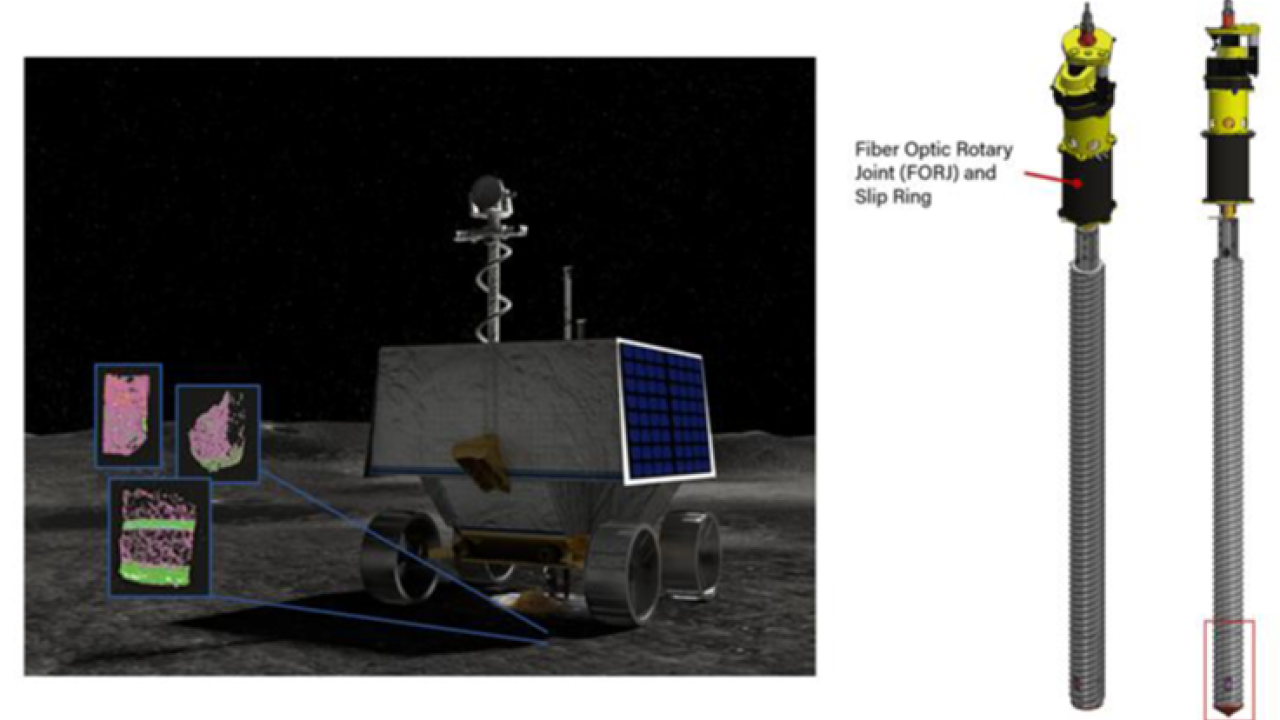
The surfaces of worlds, like the Moon or Mars, are bathed in radiation, blasted by the solar wind, and suffer extreme temperature changes. But if you can pull a sample from just a few centimeters below the surface, you can learn more about the geology of the world. Researchers recently presented a new instrument called the OptiDrill that could help collect subsurface samples and make them easier to study in a range of places in the solar system.
Read the full story by Laurence Tognetti, MSc

The center of the Milky Way is a busy place with a heavy concentration of stars, as well as compact objects like neutron stars and black holes interacting around the supermassive black hole at the center. There should be many binary systems, with everything from twin brown dwarfs to binary black holes spiraling around each other. Researchers calculate that this will cause a complex landscape of overlapping gravitational wave signals that will make observations difficult.
Read the full story by Brian Koberlein

The Moon bears the scars of an early Solar System, when debris was all around, and worlds collided. Similar events are happening in other newly forming planetary systems, and astronomers think the repercussions could last for millions of years. They simulated the Beta Pictoris system, with a Neptune-mass planet impacting a giant planet with 13 Jupiter masses, and found that it would still be varying in brightness for millions of years, detectable with modern instruments.
Read the full story by Evan Gough

Researchers have identified several features on Mars that look surprisingly similar to conditions on Earth. One notable feature is giant wave-like landforms called solifluction lobes, which are in cold, mountainous regions of Earth, like the Arctic or Rocky Mountains. These are slow-moving patterns similar to fluids running downhill, but on Mars, they're 2.6 times larger because of its lower gravity. They can grow much taller before collapsing on Mars.
Read the full story by Matthew Williams

Returning to Earth is a free ride, using the friction of the atmosphere to shed enormous velocity. But re-entering spacecraft build up high temperatures on their exteriors, which can destroy them (remember the Columbia disaster)? A team of engineers is investigating how a trick of nature—sweating—could work during spacecraft re-entry. A spacecraft would create a layer of gas on its surface that would cool the spacecraft and prevent direct contact with the hot gases.
Read the full story by Carolyn Collins Petersen

While NASA and its partners are designing the Habitable Worlds Observatory, astronomers in China are developing the Closeby Habitable Exoplanet Survey (CHES), which will use astrometry (like Gaia) to find planets through stellar wobbles. A new paper suggests that the data from both missions could work together to find dozens of Earth-like planets in habitable zones around nearby stars. They estimate more than 50 candidate planets, more than HWO alone.
Read the full story by Evan Gough
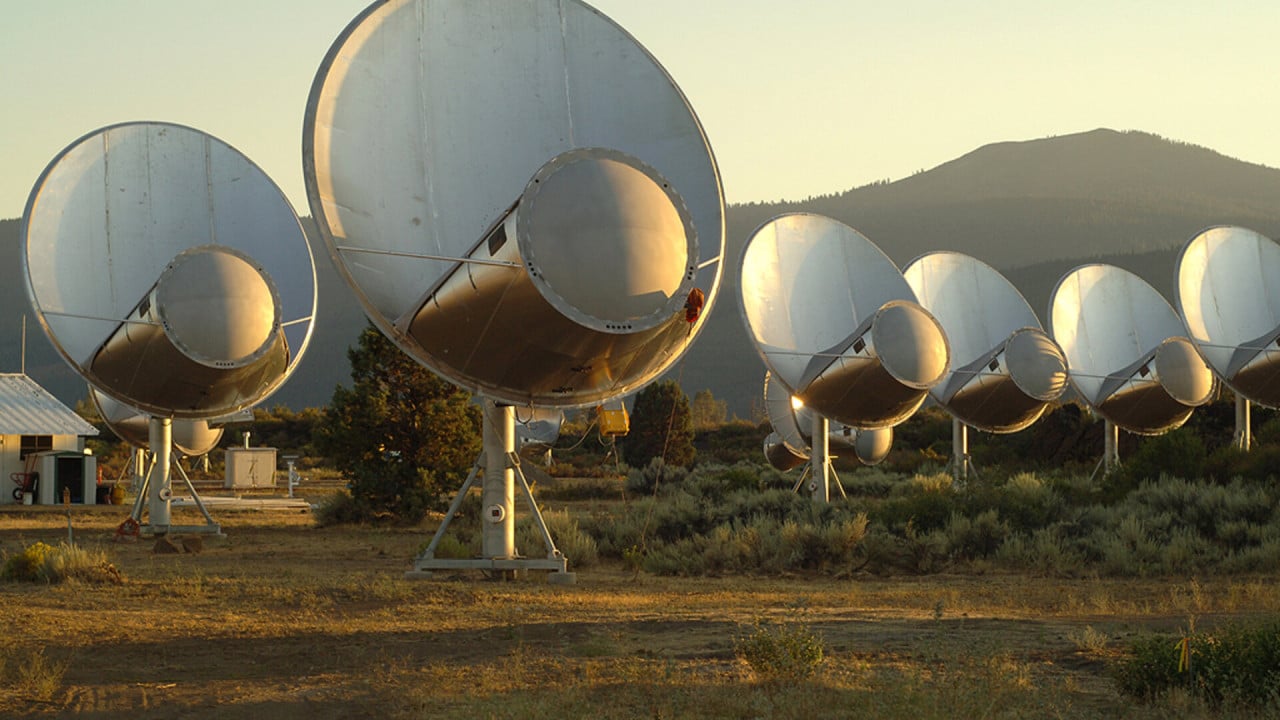
The Fermi Paradox is this apparent contradiction between the high chance the Universe has countless civilizations and the total lack of evidence or contact with anyone so far. In a new paper, a researcher calculated the probability that we could have heard at least one signal from an extraterrestrial civilization. Assuming civilizations last for a few hundred years and could be anywhere across the Milky Way, we should have a 99% chance of detecting a signal.
Read the full story by Mark Thompson

There are stars that contain much more mass than the Sun, sometimes over 100 solar masses. How can they pack on so much material early on in their lives? Astronomers targeted the ammonia (NH3) molecule, which is commonly found in interstellar gas clouds, watching the path it takes to join a newly forming star. They found that the infalling material is both collapsing inward and rotating around a young star, adding 0.2% solar masses every year.
Read the full story by Evan Gough

Which evidence will be a definite smoking gun when it comes to finding extraterrestrial life? Why is a Dyson sphere more realistic than warp drives? Will America ever adopt the metric system? And in our Q&A+ version, will China be collaborating with other nations in space? Answering all these questions and more in this Q&A show.

A mystery in astronomy is how supermassive black holes grew so big, so quickly. Astronomers have looked for quasars, actively feeding supermassive black holes, as a way to measure how much new material they're accumulating, contributing to their growth. They studied nebulae near the quasars that light up when the quasar is releasing radiation and found that many of the farthest quasars have only been active for a few hundred thousand years, not long enough to grow.
Read the full story by Mark Thompson

Astronomers suspect there are many free-floating planets drifting through interstellar space, far away from a star. But how many? According to a new paper, the upcoming Roman Space Telescope will be able to give us a glimpse into the number and mass distribution of rogue planets in the galaxy. Roman will observe thousands of microlensing events, when a rogue planet passes in front of a star, distorting its light. From this, they'll derive an estimate of the total number.
Read the full story by Carolyn Collins Petersen

Astronomers have discovered supermassive black holes at the hearts of almost every galaxy in the Universe. When a star passes too close to the black hole, it can be torn apart, releasing a huge amount of radiation, known as a tidal disruption event. Astronomers have found an example where a feasting black hole isn't stuck at the center of the galaxy; it's roaming around the bulge area of its host galaxy.
Read the full story by Evan Gough
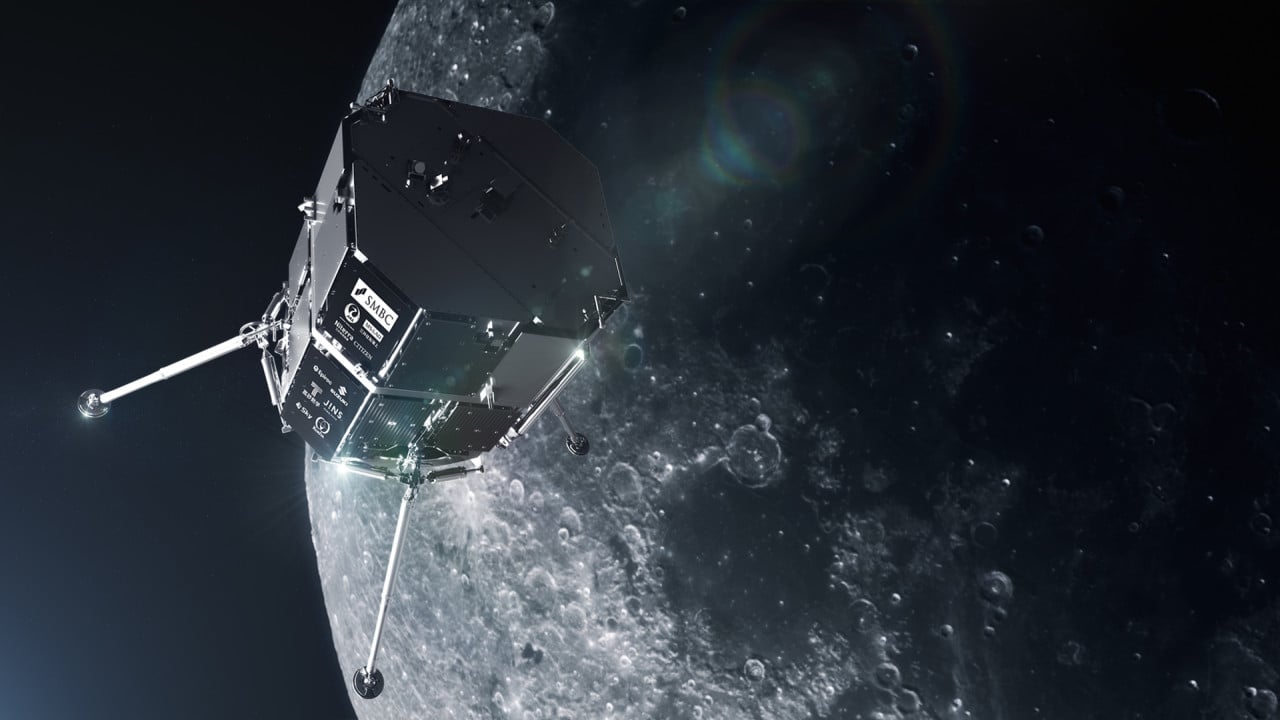
On May 7th, the Japanese space exploration company ispace announced that its HAKUTO-R RESILIENCE lander entered lunar orbit after completing a 9-minute thruster burn. It's now in a stable lunar orbit, and operators will spend the next month testing and preparing for its landing attempt on June 5. This is the company's second attempt at landing on the Moon, after the first attempt crashed in 2023. It's carrying a micro-rover and several science experiments.
Read the full story by Matthew Williams

I'm sure you're familiar with the recent announcement of potential biosignatures in the atmosphere of exoplanet K2-18 b. Although astronomers claim JWST detected the presence of dimethyl sulfide and other gases, the astronomical community has been... skeptical. In a new paper, researchers show that if you expand the model space to include more chemical possibilities, the biosignature detection disappears. Many other models give a better fit to the data.
Read the full story by Andy Tomaswick
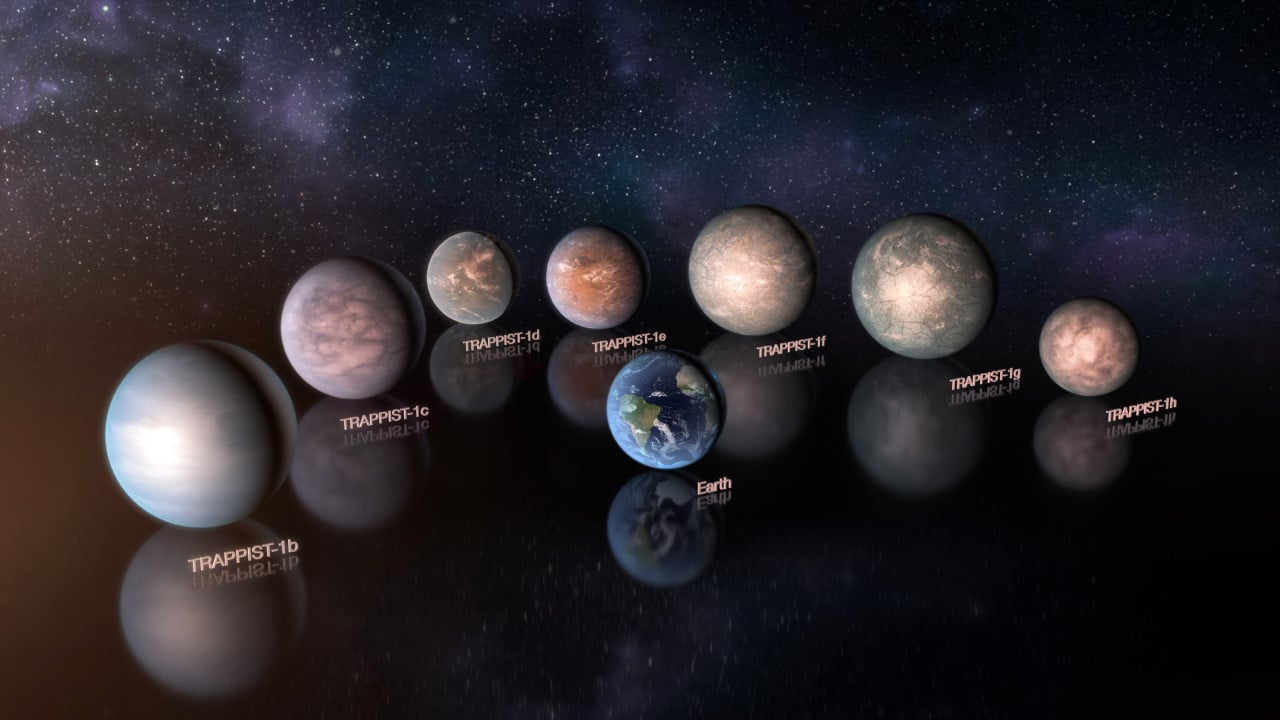
Astrobiologists continue to find a single definitive biosignature, a single chemical that could be found in the atmosphere of an exoplanet that screams, "there's life here." In a new paper, researchers propose that you need multiple planets in a system to know if you're looking at exo-forests or exo-volcanoes. If there are inhospitable planets in a system, they can serve as an abiotic baseline that you can compare with potentially habitable worlds to see life's signals.
Read the full story by Brian Koberlein

We talk about planetary habitability, but it might be more accurate to talk about the habitability of a planet in relation to its star. That's because the space weather generated by stars can have a serious impact on their planets. Consider red dwarfs, which can release powerful flares directly at the planets that could be huddled up close in their tiny habitable zones. This could have a serious impact on how an exoplanet's atmosphere develops over time.
Read the full story by Evan Gough
Thanks!
Fraser Cain
Publisher
Universe Today
As always, if you have comments or questions, or suggestions on how I can improve this newsletter, please don't hesitate to reply this email or email me at info@universetoday.com.

This work is licensed under a Creative Commons Attribution 4.0 International License.
Click here to Unsubscribe from this list.
Universe Today - #3400 333 Hunt Road - Courtenay, BC V9N 3R6 - Canada