Яндекс.Метрика

Wednesday, November 21, 2018

Speaking of Science: Here’s who you can thank for chocolate

Speaking of Science
Talk nerdy to us
 

A worker holds dried cacao seeds at a plantation in Cano Rico, Venezuela, on Nov. 15, 2012. (Ariana Cubillos/AP)

Chewing on a raw cocoa bean is an . . . unexpected adventure. Not necessarily in a good way. It is chalky, with an intense bitter taste from abundant alkaloid compounds. The fruit that contains it is gooey and white, with the unctuous consistency of yogurt and the acid-sweet taste of a sour patch kid.

But thousands of years ago, the indigenous people of the upper Amazon region realized that they could eat this sugary fruit, called Theobroma cacao. Perhaps they saw other animals enjoying the cacao and figured it would be good for them to eat, as well. Maybe a parent tried a small sample and, deciding it wasn't poisonous, fed it to her hungry family. In many ways, the history of food is the story of humanity's first science experiments.

Cacoa's earliest consumers probably spat out the seeds — who can blame them? — allowing the plant to spread across South and Central America. But sometime, somewhere, someone realized that the fruit could be fermented. Anthropologists have identified alcohol and cocoa residue on broken bits of pottery dating to as early as 1900 B.C.

Fermentation turns this sour fruit and its bitter seeds into something worthy of its Latin name, which translates to "food of the gods." Microscopic yeasts convert the sugary pulp into ethanol, then bacteria oxidize the alcohol into acid. The alcohol, acid and heat produced by these reactions cause the cell walls with the bean to break down, allowing complex chemical changes to occur. Bitter plant pigments are converted into more mellow molecules, which give chocolate its brown color and some of its flavor. Chemicals called "aroma precursors" start to take shape, setting the stage for the formation of important flavor molecules during roasting. Adding heat allows for the Maillard reaction — the same chemical process that browns the crust of bread and creates the distinctive savory flavor of roasted meat.

It's thanks to microbes, Maillard reactions, and the curious, creative minds of early Americans that humanity gets to enjoy chocolate today.

— Sarah

A silent, electric plane inspired by Star Trek has no moving parts in its propulsion system
A group of MIT researchers invented a solid-state airplane. It runs on electricity from batteries. It makes no noise. It generates no exhaust. It has no moving parts. It has no propellers, no turbines, not even a twisted rubber band.
 
ADVERTISEMENT
How to dissect your Thanksgiving dinosaur
That turkey on your Thanksgiving table is a dinosaur, and you can see the scientific proof while you carve your bird.
 
NASA's next Mars rover will look for signs of life on an ancient crater lake
In 2020, the space agency will launch a rover to look for evidence of ancient life in Mars's Jezero Crater.
 
Scientists stuffed balloons into dead wombats to learn why they poop cubes
Wombats, territorial and cantankerous cousins of koalas, use cube-shaped poop to mark their territory, essentially making a border wall of smell.
 
ADVERTISEMENT
This 'wonder of the Earth' is the size of Minnesota and built by bugs
In Brazil, insects built 200 million mounds of rock-hard dirt.
 
A massive change: Nations redefine the kilogram
"I'm just really proud of our species," metrologist Jon Pratt said.
 
Signs of a 'super Earth' discovered around a nearby star
Astronomers have discovered signs of a frozen exoplanet orbiting the closest single star to our solar system.
 
 
Recommended for you
 
 
Get The Intersect newsletter
The latest in digital culture, from viral crazes to exploding memes, delivered every Friday.
Sign Up  »
©2018 The Washington Post  |  1301 K St NW, Washington DC 20071

Monday, November 19, 2018

ESO — Cosmic Serpent — Photo Release eso1838

ESO — Reaching New Heights in Astronomy
Subscription preferences | Unsubscribe | View in browser
European
Southern
Observatory
ESO News
19 November 2018

The VISIR instrument on ESO's Very Large Telescope has captured this stunning image of a newly discovered massive triple star system. Nicknamed Apep after an ancient Egyptian deity, this may be the first ever gamma-ray burst progenitor found.

The release, images and videos are available on:
https://www.eso.org/public/news/eso1838/

Kind regards,
The ESO Education and Public Outreach Department
19 November 2018


  ESO Announcements


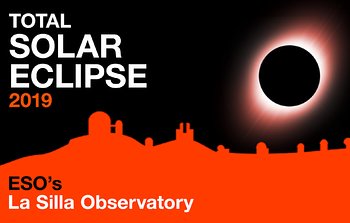
Win a Fully-Paid Trip to the La Silla Total Solar Eclipse 2019 and other ESO sites in Chile

15 November 2018: On the occasion of both the 2019 total solar eclipse visible from Chile and La Silla Observatory's 50th anniversary, we are organising a competition to win a fully-paid trip ...

Read more

Share this newsletter on:

Like ESO — Cosmic Serpent — Photo Release eso1838 on Facebook   share on Twitter   Google Plus One Button


Receive our News in your preferred language

Start receiving this newsletter in your language


 Picture of the Week


19 November 2018
A rosette for the VLT


Upcoming Events

Ongoing

24 - 29 June 2019: Starmus V

2 July 2019: Total Solar Eclipse


Upcoming Exhibitions

24 - 29 June 2019: Starmus V event. Bern, Switzerland.

 
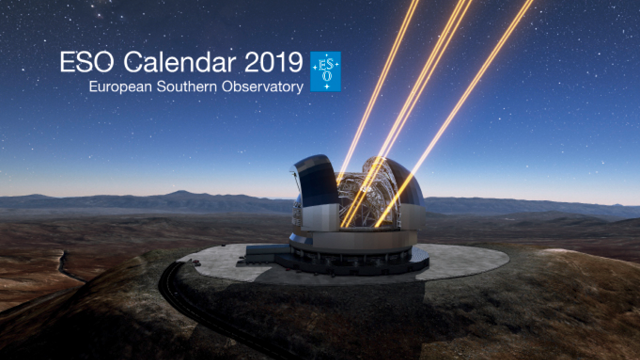
Stunning Exoplanet Time-lapse  A lonely little telescope  Extremely large astronomy  Cloudlets swarm around our local supermassive black hole  ESO Open House Day 2018 

You are receiving this newsletter because you subscribed to ESO News.

Subscription preferences | Unsubscribe | View in browser

Follow us on:

Facebook Twitter Vimeo Flickr YouTube LinkedIn Google+ Pinterest Itunes Scribd Issuu Livestream

European Southern Observatory, Karl-Schwarzschild-Str 2, D-85748 Garching bei München, Germany