Яндекс.Метрика

Wednesday, March 13, 2019

Speaking of Science: The triumph of the house finch

Speaking of Science
Talk nerdy to us

A male house finch sits on a branch near Capitol Hill in Washington, D.C. (Sarah Kaplan/The Washington Post)

If you live almost anywhere in the United States and Mexico, you've probably seen a critter like this handsome fellow. He's a male house finch, a species of small, plump bird with blushing red feathers on its head and chest (the females are decked out in a sensible mottled brown). These birds are ubiquitous around my home in D.C., especially in the springtime. It always makes me happy to spot their bright colors and hear their cheerful, warbling chirps.

But the funny thing is, these birds don't belong.

They're actually natives of the Southwest, creatures of dry chaparral and the edges of woods. They built their nests in cacti and fed on berries, buds and weed seeds.

It seems that humans (those pests!) weren't content to leave the finches in their native habitat. I learned recently from a Twitter thread by writer and naturalist Rosemary Mosco that before the passage of the Migratory Bird Treaty in 1918, people often captured American songbirds for pets. Even after the birds were protected, it seems they weren't always safe. The birds continued to be sold in New York pet shops through the 1940s, and when an inspector was about to come by, the owners would just open their cages and let the birds fly away.

But house finches are scrappy creatures, and they made the best of their new environment. By the 1990s, according to Audubon, "they had advanced halfway across the continent, meeting their western kin on the Great Plains."

What's the secret to their great success? The house finches are really good at making the most of opportunities provided by humans. Research described earlier this year in the Atlantic suggests that their beaks and even their songs have evolved as a consequence of the birds' increased reliance on seeds that humans provide at bird feeders.

Something to think about next time I spot a house finch in my neighborhood!

-- Sarah

Trump budget seeks cuts in science funding
The proposed cuts target familiar science and research programs.
 
 
ADVERTISEMENT
 
Springing forward to daylight saving time is obsolete, confusing and unhealthy, critics say
The biannual time change is under legislative challenge in states and Congress
 
The first all-female spacewalk will take place during Women's History Month
Christina Koch and Anne McClain are scheduled to conduct their mission March 29.
 
 
ADVERTISEMENT
 
History's largest child sacrifice was a response to devastating weather, archaeologists say
The bodies of about 140 children and 200 animals were found in ancient oceanside burial pits in Peru.
 
Watch a giant Amazon spider kill an opossum. Or don't. Totally your call.
Researchers from the from the University of Michigan spotted a softball-sized spider in the Peruvian Amazon dragging away a mouse opossum.
 
 
Recommended for you
Get The Energy 202 newsletter
PowerPost's daily guide to energy and environment policy, by reporter Dino Grandoni.

Wednesday, March 6, 2019

Speaking of Science: A brief history of squid work

Speaking of Science
Talk nerdy to us

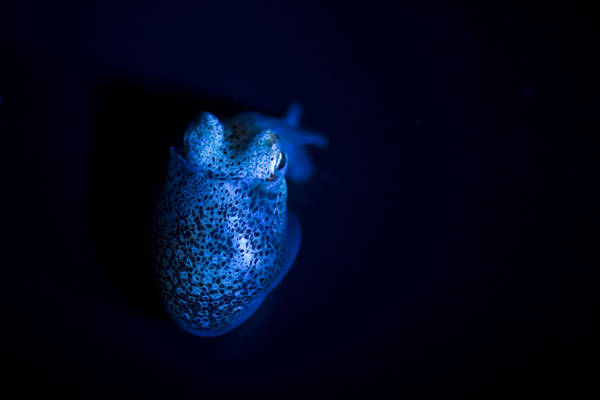
A euprymna scolopes, also known as a Hawaiian bobtail squid, is photographed in a tank at the Marine Biological Laboratory in Woods Hole, Mass., on January 22, 2019.

I recently wrote about a plan to raise octopuses and their relatives at the Marine Biological Laboratory in Massachusetts. Though this program is fairly new, squid have played an important role in research for almost a century. Here's a little bit of the history to this science:

Before World War II, scientists at the Naples Zoological Station, perched on the Mediterranean coast, received a steady squid supply from fishermen. There, Italian physiologist Enrico Sereni pioneered the study of the cephalopod nervous system until his death, at 30, in a bathtub in 1931. (Sereni's biographers who suggest foul play note his ties to the Italian anti-fascist movement.)

After Sereni's untimely demise, his collaborator, John Zachary Young, pressed on. Young extracted a squid's motor neuron, a giant nerve fiber thick with conducting jelly, and recorded its electric function. In the 1950s, physiologists Alan L. Hodgkin and Andrew F. Huxley inserted electrodes into the squid neuron and measured the voltages and currents that coursed through the nervous system. This discovery, and their mathematical explanations for it, won them a Nobel Prize in 1963.

Scientists continue to use the same species as Hodgkin and Huxley did, such as the longfin inshore squid, which cannot be bred in captivity and must be caught wild. A Marine Biological Laboratory ship, the Gemma, fishes for them from May to early December.

— Ben

Watch a giant Amazon spider kill an opossum. Or don't. Totally your call.
Researchers from the from the University of Michigan spotted a softball-sized spider in the Peruvian Amazon dragging away a mouse opossum.
 
 
ADVERTISEMENT
 
The bizarre and brilliant rules for naming new stuff in space
Craters on Mars can be named for towns with 100,000 people or fewer. Everything on Venus is named for a woman. There are asteroids for every member of the Beatles -- but don't try to name one after your pet.
 
Scientists shot a bullet into an asteroid to learn about the origins of the solar system
The Hayabusa2 mission is studying an asteroid for clues to the origin of life.
 
 
ADVERTISEMENT
 
Scientists discover the origin of Stonehenge stones – quarries 180 miles away
Archaeological evidence suggests a strong connection between Stonehenge and distant parts of Great Britain.
 
Sunlight makes this waterfall look like lava — and the photos are mesmerizing
The Yosemite Firefall is a naturally occurring phenomenon that draws hundreds to the park's Horsetail Falls at sunset during the final weeks of February, when a combination of factors can align to make the cascading waters look like glowing lava.
 
 
Recommended for you
Get The Switch newsletter
The top stories on the tech industry, tech policy and tech in our lives, delivered every weekday.