Яндекс.Метрика

Wednesday, July 11, 2018

ESO — Colourful Celestial Landscape — Photo Release eso1823

ESO — Reaching New Heights in Astronomy
Subscription preferences | Unsubscribe | View in browser

European
Southern
Observatory
ESO News
11 July 2018

New observations with ESO's Very Large Telescope show the star cluster RCW 38 in all its glory. This image was taken during testing of the HAWK-I camera with the GRAAL adaptive optics system. It shows RCW 38 and its surrounding clouds of brightly glowing gas in exquisite detail, with dark tendrils of dust threading through the bright core of this young gathering of stars.

The release, images and videos are available on:
https://www.eso.org/public/news/eso1823/

Kind regards,
The ESO Education and Public Outreach Department
11 July 2018


  ESO Announcements


Captivating new programme at the ESO Supernova — Exciting new range of planetarium shows and events available from July

11 July 2018: Over the past months, the ESO Supernova team has been preparing an amazing new programme of exciting events and shows for our Planetarium & Visitor centre. We are delighted to ...

Read more


  ESOblog


20 Years of Science at Paranal — The past, present and future of the Paranal Observatory

Interview with: Steffen Mieske

6 July 2018: Since the Paranal Observatory opened in May 1998, it has become one of the most productive observatories in the world. The observatory houses the Very Large Telescope (VLT), ESO's premier ...

Read more

Share this newsletter on:

Like ESO — Colourful Celestial Landscape — Photo Release eso1823 on Facebook   share on Twitter   Google Plus One Button


Receive our News in your preferred language

Start receiving this newsletter in your language


 Picture of the Week


9 July 2018
Swimming Moon


New on eso.org


Upcoming Events

Ongoing

24 - 29 June 2019: Starmus V

2 July 2019: Total Solar Eclipse


Upcoming Exhibitions

3 July - 31 August 2018: Exposicion sobre el Extremely Large Telescope (ELT) en Biblioteca de Santiago. Santiago, Chile.

20 - 31 August 2018: IAU General Assembly. Vienna, Austria.

24 - 29 June 2019: Starmus V event. Bern, Switzerland.

 
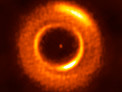
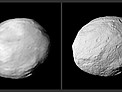
ALMA spies a new planetary nursery  New SPHERE view of Vesta  A planet hunter and its neighbour  Gentle giants of Chajnantor  Inspired by Interstellar 

You are receiving this newsletter because you subscribed to ESO News.

Subscription preferences | Unsubscribe | View in browser

Follow us on:

Facebook Twitter Vimeo Flickr YouTube LinkedIn Google+ Pinterest Itunes Scribd Issuu Livestream

European Southern Observatory, Karl-Schwarzschild-Str 2, D-85748 Garching bei München, Germany


Friday, July 6, 2018

Wednesday, July 4, 2018

Speaking of Science: True blue fireworks

Speaking of Science
Sarah Kaplan and Ben Guarino on Science
 

Macy's Fourth of July fireworks display in New York on July 4, 2017. (Alba Vigaray/EPA)

If blue fireworks in recent years have looked a little bluer, thank a chemist.

Fireworks explode thanks to the gunpowder in their shells. But the pyrotechnics get color from different chemical salts, specifically, metal chlorides. Electrons in the salts, flooded with energy as the payload heats up, have to release their excess energy somewhere. They do so as light. You might see reds from lithium salts, or oranges from calcium. Blues come from copper salts.

But the deepest blues were, historically, among the most difficult colors to produce. Blue fireworks need to hit just the right temperature. The copper compound emits blue at a high heat, but if the temperatures rocket too high, the heat destroys the metal and the colors are lost.

The introduction of an alloy of magnesium and aluminum has infused better blues into the explosions. "People may think colors look brighter; well, they're correct," emeritus chemistry professor at Washington College John A. Conkling told Chemical & Engineering News last year.

Chemists continue to tinker with the blue formula. In 2015, researchers in Munich developed new type of blue firework using bromine instead of not chlorine. Bromides are less toxic than chlorides, the chemists said, but burn as brilliantly blue. They estimated it would take five to 10 years to perfect the blue flares, but perhaps their work will light up future Fourths.

Ben

America is a nation of narcissists, according to two new studies
In a study of collective narcissism, Virginia and Massachusetts ranked first. But almost every state felt self-important.
 
Scientists respond to court ruling on travel ban with fear and frustration
"I don't have any words for it other than discrimination," one professor said. "It's frustrating to see this as a scientist."
 
ADVERTISEMENT
Many asteroids might be remnants of five destroyed worlds, scientists say
The "planetesimals" were doomed to collide, producing fragments that also collided, producing still more fragments in a cataclysmic cascade that's been going on for more than 4 billion years.
 
NASA needs to upgrade its 'planetary protection' efforts, experts say
Alien microbes could gum up the plans for Mars exploration.
 
Koala genome shows how the adorable marsupial lives on eucalyptus leaves
Eat, rest, sleep: Genes provide clues to the koala's life in the trees.
 
These animals depend on darkness. But humans have ruined their nights.
These are the kinds of lights that are worst for wildlife.
 
ADVERTISEMENT
Good news for human life spans — at age 105, death rates suddenly stop going up
But good luck living to 105.
 
The James Webb Space Telescope is — wait for it — delayed again
The cost of the new NASA telescope has risen to $9.66 billion after an independent review found that it was plagued by embedded problems and human errors.
 
It's a comet! No, it's an asteroid! No, it's an alien spaceship! (Actually, it's a comet.)
An interstellar visitor becomes just slightly less mysterious.
 
 
Recommended for you
 
 
Get The Intersect newsletter
The corner of the Internet and interesting, in your inbox weekly.
Sign Up  »
©2018 The Washington Post  |  1301 K St NW, Washington DC 20071